


One ugly stump can make renting look smart. Ten stumps spread across a property, or repeat clearing jobs every month, can make renting feel like borrowed time. That is where the real stump grinder rental vs buying decision starts - not with sticker price, but with how often you need the machine, how fast you need the work done, and what downtime costs you.
If you are a homeowner clearing one or two leftovers from a recent tree removal, rental may be enough. If you are a landowner, tree service, farmer, or skid steer operator handling stumps as part of regular work, ownership usually starts making sense faster than most people expect.

Stump grinder rental vs buying comes down to usage
The simplest way to look at it is this: rent for occasional use, buy for recurring use. But that only tells part of the story.
A rental can be the right move when the scope is small, your access is straightforward, and you can finish the job in one clean window. You pay once, use the machine hard, and return it. No storage, no maintenance, no long-term capital tied up.
Buying changes the math when stump work shows up repeatedly or when it sits inside larger jobs. If you already run a skid steer, excavator, or tractor, owning a stump grinder attachment can turn an outsourced task into one more profitable service line. It also means you work on your schedule, not the rental yard's schedule.
That matters more than people think. Weather shifts. Ground conditions change. A crew gets delayed on a tree removal job and suddenly the one-day rental turns into two. What looked cheap on paper can get expensive fast.
When renting a stump grinder makes sense
Rental is usually strongest for low-frequency work. If you have a single stump in the backyard, or a handful of stumps after a storm cleanup, renting may save money. It is also a reasonable option if you are still testing demand before adding stump grinding as a paid service.
There is another case for renting: trying out a machine class before you buy. A weekend rental can teach you a lot about cutting speed, visibility, control, and whether a walk-behind unit is enough or you really need a hydraulic attachment for your carrier.
Still, rental has real limits. You may not get the exact machine you want. The unit may be worn, dull, or undersized for the hardwood stumps on your property. You are also paying for the clock, which encourages rushing. That can hurt finish quality and operator safety.
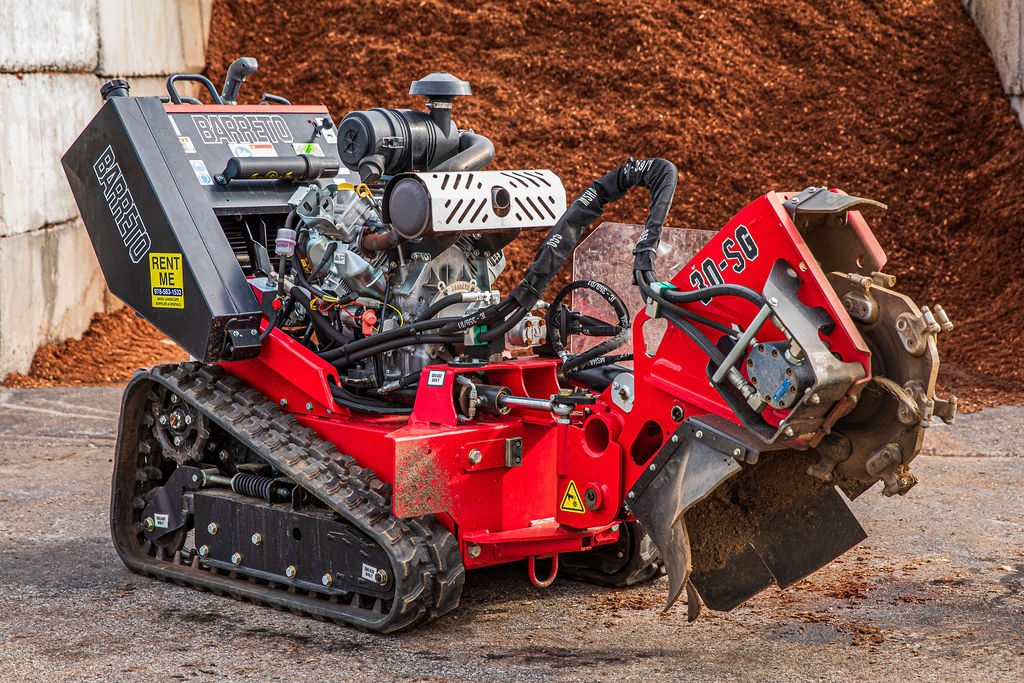
For homeowners, rental can also mean more physical wear than expected. A self-propelled or walk-behind grinder is still work. If the site has slopes, tight turns, roots, or a long approach from the trailer drop point, the savings can disappear into fatigue.
Hidden costs of renting
The daily rate is only part of the story. Fuel, transport, delivery fees, damage waivers, tooth wear charges, and extra rental days all add up. If you lose half a day picking up equipment, loading it, and returning it, that is time you are not spending on the actual work.
Commercial operators feel this harder. A crew waiting on a rental is a crew burning labor dollars. A delayed job can also hold up grading, seeding, fencing, or finish work behind it.
When buying a stump grinder is the better move
Buying is the stronger choice when stump removal is repeat work, part of your core service, or a recurring need on a farm, ranch, or large property. Ownership gives you control, and control usually produces more output.
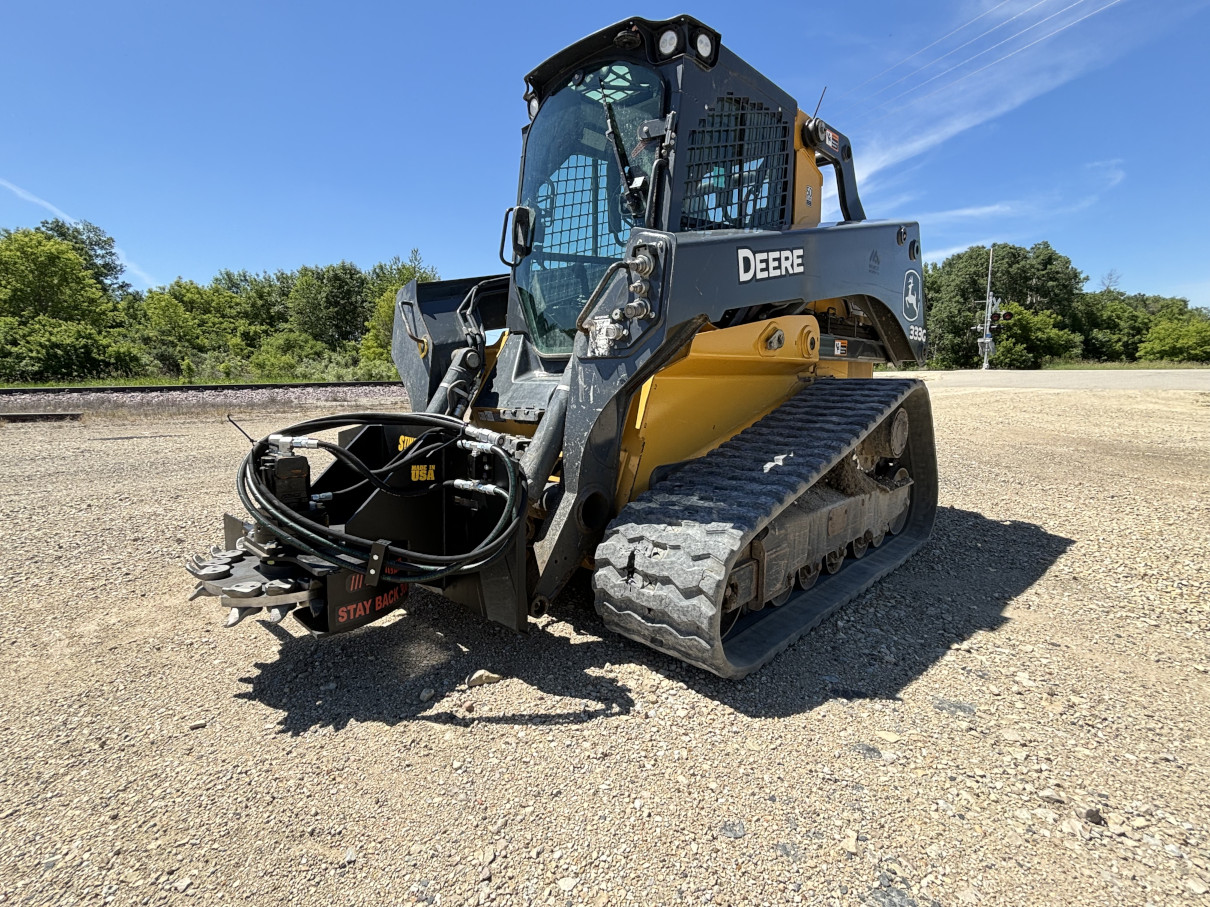
If you already own a skid steer or excavator, a stump grinder attachment can be one of the easiest ways to increase machine utilization. Instead of hiring out stump work or scheduling around rental inventory, you put your carrier to work with the right attachment and keep the job moving.
That has a direct payoff. You reduce idle time, avoid repeated rental fees, and keep revenue in-house. For contractors, arborists, and land-clearing crews, that can justify the purchase quickly.
Buying also tends to improve job quality. A properly matched attachment with the right hydraulic flow will cut cleaner, work faster, and stay productive on larger or harder stumps. You are not stuck making do with whatever is available that morning.
Ownership pays off in more than dollars
There is a health and safety angle here too. The right hydraulic stump grinder reduces hand labor, awkward positioning, and the temptation to improvise with chainsaws, excavator buckets, or digging by hand. Less strain matters if this is work you do regularly. Your back, shoulders, and wrists have a long memory.
Owning also helps protect your reputation. If stump grinding is part of your business, customers notice whether you can schedule promptly and finish the job without excuses. A machine you control is one less weak link.
The real cost question: frequency, volume, and carrier fit
The best buying decision usually comes from three factors: how often you grind, how much material you handle, and what machine you already own.
If you expect to remove a few stumps per year, rental is usually the cheaper path. If you are looking at monthly use, seasonal bursts, or bundling stump removal with tree work, brush clearing, or site prep, ownership starts to look better.
Volume matters too. Small ornamental stumps are one thing. Large hardwood stumps, dense root flares, and multiple sites per week are another. Bigger work punishes undersized rentals and rewards heavy-duty attachments.
Carrier fit may be the biggest factor of all. A stump grinder is only as productive as the machine driving it. Skid steer owners need to pay attention to hydraulic flow, pressure, attachment plate compatibility, and visibility. Excavator operators need to think about reach, swing control, and hydraulic requirements. Tractor owners need to look closely at PTO or hydraulic options and how the machine will handle the workload.
A cheap grinder that does not match your machine is not a bargain. It is a bottleneck.
How to decide without overthinking it
If you are still on the fence, ask yourself a few blunt questions.
Will you need a stump grinder more than a couple times a year? Do you already have a compatible carrier? Is stump work delaying larger jobs or eating into crew efficiency? Could you charge for stump grinding as an add-on service? Are you tired of the physical grind and scheduling hassle that comes with one-off solutions?
If most of those answers are yes, buying is probably the smarter move.
If your use is rare, your site access is easy, and you are confident you can finish the job in one rental period, renting is a fair call. Just budget for the real cost, not the advertised daily number.
What buyers should look for if they choose ownership
Not every grinder is built for serious work. If you are buying, focus on construction quality, tooth system, serviceability, and machine compatibility first. Cutting wheel design, hydraulic motor performance, and frame strength matter more over time than a low upfront number.
For skid steer and excavator owners, buying from a supplier that understands attachment matching is worth real money. You want guidance on flow range, mount compatibility, stump size expectations, and the kind of wood you are cutting. That is how you avoid buying too small and regretting it, or overspending on capacity you will never use.
This is also where a quality-first retailer earns its keep. Log Bear Works focuses on heavy-duty, jobsite-capable equipment that is built to reduce strain and keep productivity high. If you are considering ownership, the smart next step is to look at stump grinder options by your carrier type and have a knowledgeable team help match the attachment to your machine and workload.
The bottom line on stump grinder rental vs buying
The wrong choice usually shows up as wasted time. Rent too often, and you keep paying for delays, transport, and limited availability. Buy too early, and you tie up money in a machine that sits.
But if stump grinding is becoming repeat work, or if it supports the kind of land clearing, tree service, or property maintenance you already do, ownership often becomes the better business decision faster than expected. More control, less downtime, and less physical punishment tend to beat the short-term appeal of a rental.
The best equipment decision is the one that keeps work moving, protects your body, and pays for itself in real output. That is the standard worth using.