


A skid steer can either save you days of hard labor or waste a week fighting the wrong tool. When buyers ask about the best skid steer attachments for land clearing, the real answer is not one attachment - it is the right attachment for the material on the ground, the horsepower at the coupler, and how clean you need the finish when the job is done.
That matters whether you are reclaiming overgrown acreage, opening trails, cleaning fence lines, knocking back invasive brush, or prepping lots for construction. Choose well, and you move more material, protect your machine, and put less punishment on your back and shoulders. Choose badly, and you burn fuel, stall productivity, and end up renting or buying a second tool to finish the job.
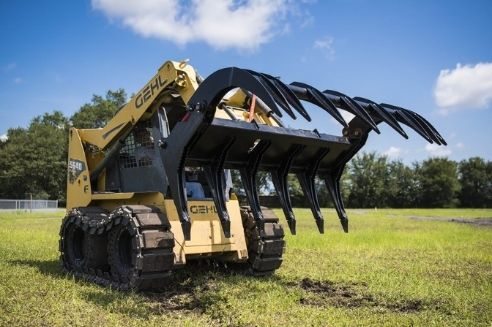
How to choose the best skid steer attachments for land clearing
Start with the material. Light brush, saplings, thorny overgrowth, root balls, and stumps all ask for different cutting and handling methods. A machine that handles waist-high brush all day may struggle badly when you start pushing hardwood stems or grinding old stumps.
Next, look at hydraulic flow. This is where a lot of costly mistakes happen. Brush cutters and forestry mulchers are not interchangeable from a machine-power standpoint. A standard-flow skid steer may run a lighter-duty cutter just fine, but a mulcher usually wants high flow and enough horsepower to keep the rotor working under load. If your machine cannot feed the attachment properly, production drops fast.
Then think about the finish. Are you trying to make rough access through heavy cover, or leave a property clean enough for seeding, mowing, or sale? Some attachments are built to knock material down fast. Others are built to process, rake, and clean so you are not coming back with a second machine.
1. Brush cutter
For many property owners, a brush cutter is the first and best buy. It is the practical answer for thick grass, vines, volunteer trees, and woody brush that is too much for a mower but does not justify a mulcher. If your work mostly involves reclaiming overgrowth, maintaining trails, clearing hunting lanes, or opening field edges, this attachment earns its keep quickly.
A brush cutter is usually the best value because it covers a lot of ground without demanding the hydraulic power or purchase price of a forestry mulcher. It is also a good fit for buyers who need a tough, versatile tool but are not clearing full-time.
The trade-off is finish quality. A cutter drops and chops material, but it does not leave the same processed result as a mulcher. You may still need to move piles, deal with stumps, or make another pass with a grapple or rake.
2. Forestry mulcher
If you are clearing dense brush, heavy saplings, and small trees and want the cleanest one-pass result, a forestry mulcher is hard to beat. It turns standing vegetation into mulch, reduces hauling and burn piles, and leaves a site far more finished than a cutter.
This is often the top production tool for contractors and serious land managers, especially when the job includes repeated clearing across multiple properties. It can save major labor because you are cutting and processing in the same pass.
But this is also the attachment most likely to be overbought. Mulchers cost more, weigh more, and demand more from the skid steer. If your machine is marginal on hydraulic flow or lift capacity, you will not get the throughput you expect. For lighter acreage maintenance, a brush cutter may deliver better ROI.
3. Tree shear
A tree shear is built for controlled cutting of standing trees and larger woody stems. Instead of shredding material in place, it cleanly cuts and drops it. That makes it especially useful for fence rows, right-of-way work, selective clearing, and jobs where you want better control over where the tree falls.
Tree shears shine when you are removing stems that are too large or too numerous for efficient brush cutting. They are also safer and more precise than trying to improvise with the wrong attachment.
The limitation is cleanup. A shear handles the cutting, not the processing. If you are dropping a lot of material, you may still need a grapple, bucket, or chipper strategy to finish the site.
4. Tree puller
For small trees, invasive growth, and saplings where root removal matters, a tree puller can be a smart choice. Instead of cutting the stem and leaving regrowth potential, it pulls the plant with the root mass. That can make a big difference when you are dealing with species that come back aggressively.
This attachment is especially useful on pasture edges, hedgerows, and properties where repeat maintenance has become a yearly problem. Pulling can reduce future labor because you are not just knocking growth back - you are removing it.
It is not the fastest option for broad-acre heavy brush. It is a more selective tool, and in rocky ground or larger diameter trees, productivity can drop. Still, for targeted clearing with long-term control in mind, it is a strong option.
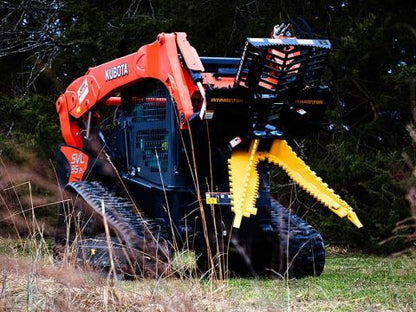
5. Grapple bucket or root grapple
Land clearing is not just cutting. It is handling. Once the brush is down, somebody has to move the mess. A grapple bucket or root grapple is one of the most useful attachments you can own because it turns a skid steer into a cleanup machine.
For storm debris, brush piles, downed limbs, logs, root clumps, and demolition leftovers, a grapple keeps material secure and moves it fast. A root-style grapple is especially good when you want to separate dirt from debris, while a grapple bucket offers more versatility for mixed material.
If you already have a cutting attachment, a grapple is often the second purchase that makes the whole workflow profitable. It reduces hand loading, cuts fatigue, and speeds site cleanup in a way buyers appreciate the first week they own one.
6. Stump grinder
If the clearing job needs to go beyond surface cleanup, a stump grinder belongs on the short list. It removes the obstacle that keeps land from being graded, seeded, built on, or safely mowed.
This is a high-value attachment when your jobs include lot prep, trail building, or finish-grade work. Grinding is usually faster and less disruptive than digging every stump, especially when you want to avoid tearing up surrounding soil.
The key is sizing it correctly to your machine and workload. For occasional stump removal, lighter-duty models may be enough. For regular commercial work, you want heavier construction, dependable tooth systems, and enough hydraulic support to keep production steady.

7. Stump bucket
A stump bucket is simpler and more affordable than a grinder, but it has a place. It is useful for prying out smaller stumps, cutting roots, digging around root balls, and tackling stubborn brush clumps in rough clearing conditions.
It works best when you are doing aggressive land reclamation and do not need a finished surface right away. Farmers, ranchers, and rural landowners often like stump buckets for spot work because they are straightforward, tough, and effective for the price.
The downside is ground disturbance. A stump bucket can leave a rougher site and usually creates more backfill work than a grinder. If appearance and finish matter, grinding may be the better call.
8. Rock bucket or landscape rake attachment
Once the heavy material is gone, you may still be left with roots, sticks, stones, and surface trash. That is where a rock bucket or rake-style cleanup attachment pays off. It helps you gather debris while leaving more soil behind, which is valuable when you are prepping for pasture, lawn, or final grading.
This type of attachment is not always the first one buyers think about, but it often saves the most frustration at the end of a clearing job. The cutting phase gets the attention. Cleanup is what determines whether the site is truly done.
Which attachment is best for your kind of clearing?
If you are mostly cutting brush and small saplings over large areas, start with a brush cutter. If you need a cleaner finish and have the machine for it, move up to a forestry mulcher. If standing trees are the problem, a tree shear gives you control and speed.
If regrowth is the enemy, a tree puller can be the smarter long-term play. If you already cut material and need to move it efficiently, buy a grapple. If stumps are keeping the job from being finished, choose between a grinder for cleaner removal and a stump bucket for rougher, lower-cost extraction.
A lot of buyers do best with a two-attachment setup rather than chasing one do-it-all tool. A cutter plus grapple, or a shear plus grapple, often handles far more real-world work than one premium attachment used outside its sweet spot.
A smarter buying decision starts with machine match
The best skid steer attachments for land clearing are only the best if they match your machine and your workload. That means hydraulic flow, operating capacity, attachment weight, coupler fit, and the kind of material you face every week - not just on your biggest job of the year.
This is where it pays to buy from people who understand both homeowners and operators. At Log Bear Works, the goal is not to push the biggest attachment. It is to help you choose one that clears faster, lasts longer, and saves your body from unnecessary wear while keeping your machine productive.
If you are between two options, lean toward the attachment you will use profitably most often, not the one that sounds toughest on paper. The right tool should help you produce more, clean up faster, and finish the day with less machine strain and less strain on you.