


A lot of attachment mistakes start the same way: the job looks simple from the cab, then the wrong tool turns an eight-hour clearing day into a week of rework. When you're weighing tree shear vs tree puller, the real question is not which one is better overall. It is which one matches the size of growth, the root problem, the finish you need, and the machine you already own.
If your goal is faster production on standing timber, saplings, and brush with minimal strain on the operator, a tree shear often wins. If your goal is to remove small trees with the roots so they do not come back, a tree puller can be the smarter buy. Both save your back, both beat hand cutting and chainsaw-heavy cleanup, and both can pay for themselves quickly when matched to the right work.
Tree shear vs tree puller: the core difference
A tree shear cuts the tree at or near ground level. Depending on the model, it may also hold the trunk while you carry and stack it. That makes it a production tool first. It is built to drop or handle standing material quickly so you can clear fence lines, roadsides, trails, lots, and overgrown acreage without climbing in and out of the machine all day.
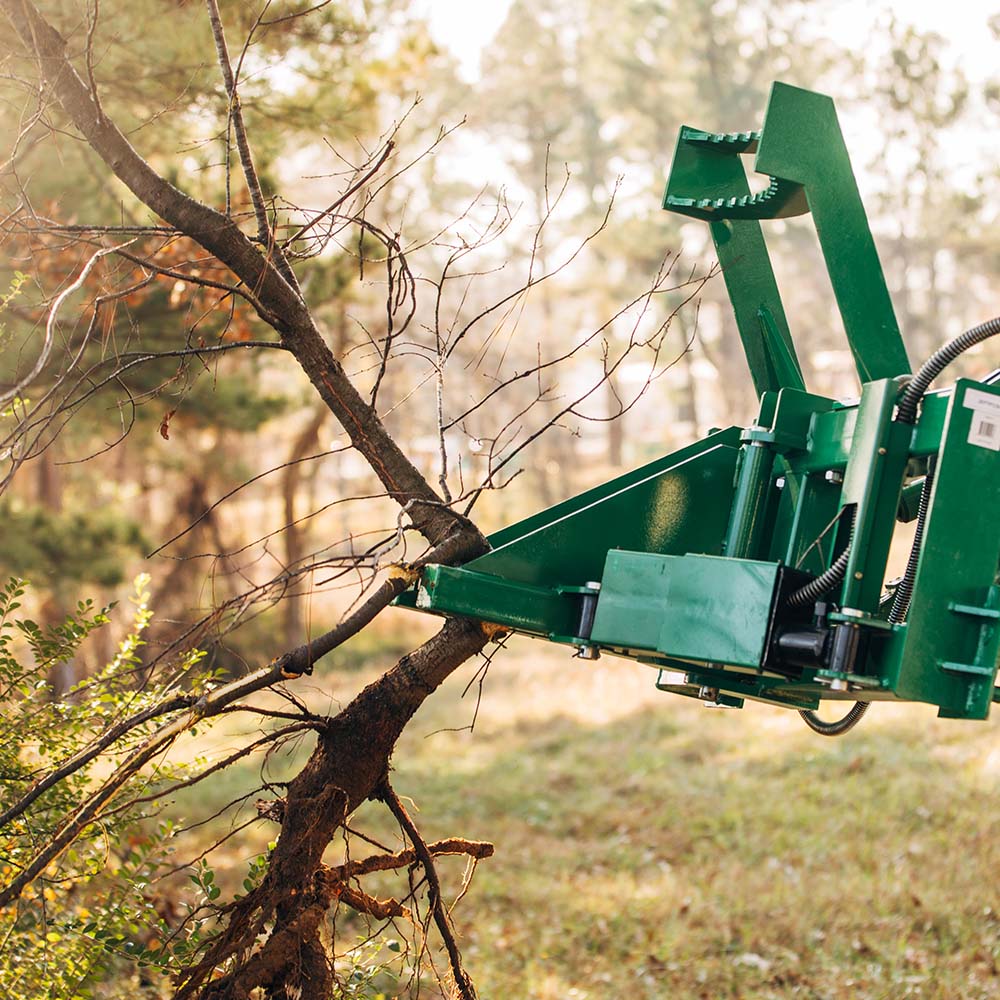
A tree puller grips the trunk or stem and uses leverage plus machine power to pull the tree out with the roots attached. That makes it a removal tool first. It is especially useful when regrowth matters, when you are dealing with invasive species, or when you want to avoid leaving rooted stems behind.
That difference matters because cutting and removing are not the same job. Many buyers think they need root removal when they really need speed. Others buy for speed, then realize they now have a field full of stumps, sprouts, or follow-up work.
When a tree shear is the better tool
If you clear enough material that time per tree matters, a tree shear usually pulls ahead. It works well for operators who need to move through a site efficiently, especially on skid steers and excavators set up for repeated cutting cycles. A quality shear lets you approach, clamp, cut, and move on with less manual handling than saw work.
This is where a tree shear earns its keep: larger stems, denser material, and jobs where stacking or processing cut trees matters more than full root extraction. For firewood operations, property cleanup, and commercial land clearing, that can translate directly into more output per day.
There is a trade-off. A shear leaves the root system in place unless you come back with another attachment. In some situations that is completely fine. On a trail cut, a field edge, or a thinning project, leaving roots can help hold soil and reduce disturbance. On a site where clean finish grade or regrowth control matters, it can create a second phase of work.
Tree shears also tend to make more sense as tree size increases. Pullers are excellent on smaller material, but once trunk diameter climbs and root systems get more established, a puller can become slower, rougher on the machine, or simply less practical.

Best-fit jobs for a tree shear
A tree shear usually makes the most sense for acreage owners maintaining lines and lanes, contractors clearing larger volumes, and operators who want to cut, carry, and pile material with fewer steps. It is also a strong choice when the machine has enough hydraulic capability to run the attachment properly and the operator wants cleaner production on thicker stems.
If you already know you will mulch, chip, burn, stack, or process the cut material, a shear fits that workflow better than a puller. It keeps the day moving.
When a tree puller is the better tool
A tree puller shines when the trees are smaller and the roots are the real problem. Think fence rows full of volunteer growth, brushy pasture edges, invasive saplings, pond banks, and spots where repeated regrowth turns into a maintenance headache every season.
Because the tree comes out roots and all, a puller can reduce follow-up spraying, mowing, or recutting. That is the biggest reason many landowners and ranch operators prefer one. On the right material, it can leave a cleaner long-term result even if the immediate pace is slower than shearing.
A puller also reduces stump issues. If you are trying to reclaim usable ground or avoid driving around cut stumps later, pulling can save frustration. It is especially appealing for buyers who are not clearing heavy timber but are constantly fighting smaller woody growth.
The trade-off is site disturbance. Pulling roots disturbs soil more than cutting. On soft ground, slopes, or erosion-sensitive areas, that may not be what you want. Pulled trees also carry dirt in the root ball, which can complicate piling, burning, or cleanup. And once stem size goes beyond the attachment's sweet spot, productivity falls fast.
Best-fit jobs for a tree puller
A tree puller is often the better choice for farms, ranches, and rural properties dealing with persistent small-tree invasion. It also fits operators who care more about preventing regrowth than maximizing stem-by-stem speed. If your work is mostly saplings and brush-sized trees rather than mature trunks, a puller can be the more efficient long-term answer.
How to choose between a tree shear and tree puller
Start with tree size, because that eliminates bad options quickly. If most of your work is small saplings and brushy volunteer growth, a puller deserves serious attention. If you are routinely tackling larger stems or want to handle and pile cut trees efficiently, a shear is usually the stronger performer.
Next, think about the finish. Do you need roots gone, or do you just need the standing material cut and removed from the work area? That one question saves a lot of buyers from overspending or buying the wrong attachment class.
Then look at your machine. Hydraulic flow, operating capacity, attachment plate compatibility, and machine weight all matter. A bigger attachment is not automatically a better one if your skid steer, excavator, or tractor cannot run it safely and productively. This is where commercial operators tend to be disciplined and homeowners sometimes get burned.
Ground conditions matter too. In rocky ground or where soil disturbance is a concern, cutting may be cleaner and more predictable. In looser soils with manageable stem size, pulling may be faster than expected and leave you with less regrowth work later.
Finally, be honest about your business model or property goals. If you earn money on production, cycle time matters. If you are trying to solve a recurring problem once and for all, root removal may matter more than speed.
Tree shear vs tree puller for ROI
From a return-on-investment standpoint, the better attachment is the one that removes the most labor from your process. A tree shear often wins on crew efficiency because it cuts down chainsaw time, reduces operator fatigue, and speeds up handling of standing material. That can be a major advantage for tree service crews, lot-clearing contractors, and anyone billing by the day or acre.
A tree puller often wins on reduced repeat work. If unwanted growth keeps coming back, the money is not just in this month's clearing. It is in avoiding the same job next year. For landowners and maintenance-focused operators, that can be the better financial move even if hourly production looks lower at first glance.
This is why there is no universal winner in tree shear vs tree puller. One attachment is not replacing the other. They solve different bottlenecks.
What buyers get wrong most often
The most common mistake is shopping by the maximum advertised tree diameter and stopping there. Diameter matters, but so do species, root depth, soil conditions, machine stability, and how you want the site to look afterward. A tool that handles a certain size in soft conditions may be far less effective in dense hardwood growth or dry compacted ground.
The second mistake is ignoring the cleanup phase. Cutting is only part of the job. Ask yourself what happens next - pile it, process it, mulch it, burn it, haul it, or leave it. Your attachment choice should support the whole workflow, not just the first minute of contact.
The third mistake is buying too light. Cheap attachments look fine online until they start flexing, slipping, or causing downtime under real workload. If you clear land for income or maintain enough acreage that downtime costs you weekends and weather windows, heavy-duty construction is worth paying for.
The right call for most buyers
If your workload centers on higher-volume cutting, larger stems, and faster site production, go with a tree shear. If your workload centers on small trees, root removal, and stopping regrowth, go with a tree puller. If your work mixes both, choose the one that addresses the costlier bottleneck first.
That is usually the smartest buying approach: solve the job that steals the most time, causes the most rework, or beats up your body the most. If you are unsure which attachment matches your machine and the material on your property, get machine-specific guidance before you buy. The right fit will help you clear more ground, avoid wasted motion, and keep your equipment working for you instead of against you.
Good attachments do more than remove trees. They buy back time, save wear on your body, and make the next job easier than the last.