Log Splitters - Log Bear Works

Log Splitters

53 Products

Frequently Asked Questions

What size (tonnage) log splitter do I need?

Tonnage depends on the wood you split and how often. For softwood up to 10 inches in diameter, 20 to 25 tons is plenty. For mixed hardwood up to 16 inches, look at 27 to 34 tons. For seasoned oak, hickory, or maple over 16 inches, go with 37 tons or more. Match the splitter to the hardest wood you will regularly process. Compare 25-ton and 35-ton splitters.

Horizontal or vertical: which orientation should I get?

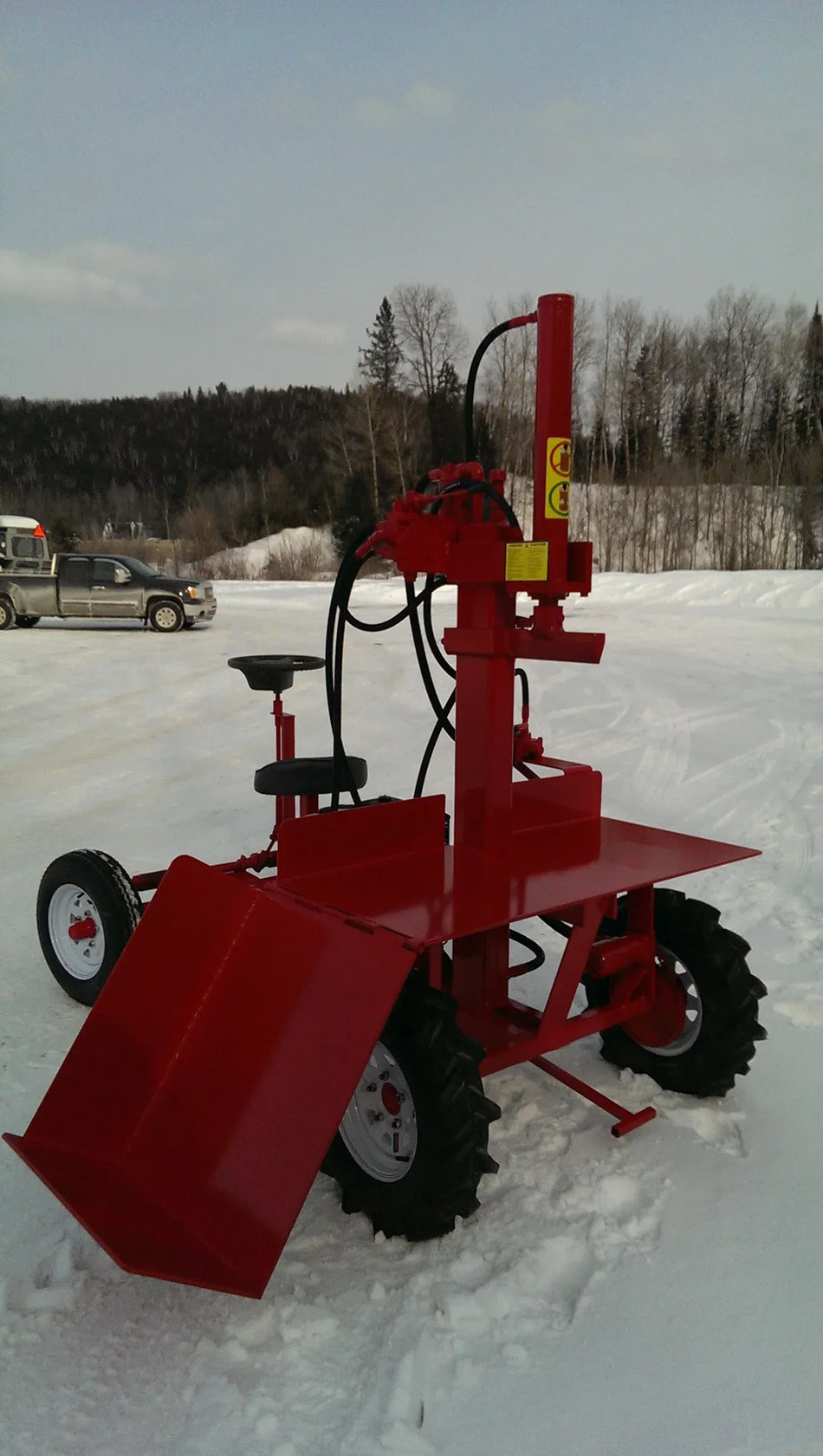
Horizontal-only splitters keep logs at waist height, which is easier on your back, but you have to lift each log onto the beam. Horizontal and vertical splitters tilt to the ground so you can roll heavy logs in instead of lifting them. For logs over 50 to 80 lbs, choose a horizontal and vertical model or a splitter with a hydraulic log lift. Brave, BravePro, Iron & Oak, NorthStar, DK2, and Ramsplitter all offer horizontal and vertical models in this collection. Compare horizontal vs vertical.

Gas, electric, or tractor hydraulics: which power source?

Gas is portable and powerful, the best choice if you split away from power or move the splitter around the property. Electric is quiet with no fumes and works well near an outlet, with our electric models topping out at 20 tons. Our 3-point tractor splitters run off your tractor's existing hydraulic system, which is the most cost-effective option if you already own a tractor, since there is no second engine to fuel or maintain. Worth knowing: these are not PTO splitters. A PTO splitter spins its own pump off the tractor's PTO shaft, and we do not carry that style. Skid steer models work the same way as the 3-point units, running off the loader's hydraulics.

Will it handle hardwood like oak or hickory?

Yes, but tonnage matters. Oak, hickory, and other hardwoods take more force, especially when seasoned. For hardwood under 12 inches, a 25-ton splitter handles it. For 12 to 18-inch hardwood, you want 30 to 34 tons. For knotty or seasoned hardwood over 18 inches, look at 37 tons and up or a kinetic splitter. See our hardwood splitter guide.

What's the difference between cycle time and tonnage?

Tonnage is how much force the ram pushes. Cycle time is how fast the ram extends and retracts. Most 25 to 37-ton hydraulic splitters in this collection cycle in 12 to 14 seconds, the Ramsplitter HDFC does it in 8 seconds, and a kinetic splitter fires in about 1 second. For small batches, cycle time barely matters. For commercial volume or processing cords fast, it saves real hours. Learn what cycle time really means.

Are kinetic log splitters worth it?

Kinetic splitters fire in about 1 second instead of the 12 to 14 seconds of a typical hydraulic splitter, so they pay off if you process 2 or more cords per session or run a firewood business. They are not always the expensive option either: our DK2 kinetic model is priced in the same range as many mid-size gas hydraulic splitters. For homeowner use under a cord per weekend, a standard hydraulic splitter is plenty. See when fast cycle time pays off.

Which log splitters have a log lift?

The NorthStar 42-Ton Horizontal Log Splitter and the NorthStar 37-Ton Deluxe Horizontal Log Splitter both include a hydraulic log lift that raises heavy rounds onto the beam for you. The 42-ton model's lift handles logs up to 660 lbs. If you don't need a log lift, a horizontal and vertical splitter also saves lifting by letting you roll rounds in at ground level. See the NorthStar 42-Ton with Log Lift.