


If you've ever tried to push stringy oak or knot-heavy hickory through an underbuilt splitter, you already know the problem - hardwood punishes weak equipment. The best log splitter for hardwood is not just the one with the biggest number on the decal. It's the one that matches your wood species, log diameter, production goals, and how much wear you're willing to put on your body.
Hardwood splitting gets expensive when you buy too small. You waste time on half-splits, stalled wedges, repeated repositioning, and the kind of manhandling that leaves your back and shoulders barking by the end of the day. Buy too big, though, and you can spend more than you need or end up with a machine that doesn't fit your tractor, skid steer, or actual workload. The right choice is about force, speed, and fit.
What makes the best log splitter for hardwood?
When people shop splitters, tonnage gets all the attention. It matters, but not by itself. Hardwood performance comes from the combination of splitting force, cycle time, wedge design, beam strength, engine or hydraulic power, and the way the machine handles ugly rounds.
For straight-grain ash or smaller maple, a lighter-duty machine may do the job. For stubborn oak, elm, locust, or seasoned hickory, you need more reserve force and better overall build quality. Hardwood does not forgive flex, weak hydraulics, or bargain components.
That is why the best log splitter for hardwood usually lands in one of three categories. For homeowners heating with wood and processing a steady seasonal pile, a serious gas hydraulic splitter often makes the most sense. For farms and rural properties already running tractors, PTO-driven splitters can deliver excellent value with fewer engines to maintain. For firewood producers, tree crews, and operators who want serious output, skid steer log splitters are in a different class entirely.
Tonnage matters - but only to a point
As a rule, 20 to 27 tons can handle a fair amount of mixed firewood if the rounds are clean, reasonably sized, and not badly twisted. Once you get into larger-diameter hardwood or consistently gnarly wood, 28 to 35 tons starts to make more sense. Above that, you are generally looking at higher-volume production or commercial use where time saved per cord becomes real money.
The catch is that a slow 35-ton machine can still be frustrating if you're feeding it all day. Cycle time affects output just as much as brute force. If the splitter hits hard but takes too long to return, your hourly production suffers. For many buyers, the sweet spot is a machine with enough tonnage for the worst wood you actually process, plus a cycle time that keeps you moving.
Wedge design also changes the game. A well-shaped wedge can reduce hesitation in tough grain. Some operators benefit from four-way wedges for clean, consistent rounds, but in nasty hardwood they can also increase resistance. If your wood is often knotty or twisted, a standard wedge may be slower on paper but more efficient in practice.
Choosing by workload, not wishful thinking
The biggest mistake homeowners make is buying for the occasional easy log. The biggest mistake commercial operators make is buying for average conditions when their money is made in peak-season volume.
For homeowners and acreage owners
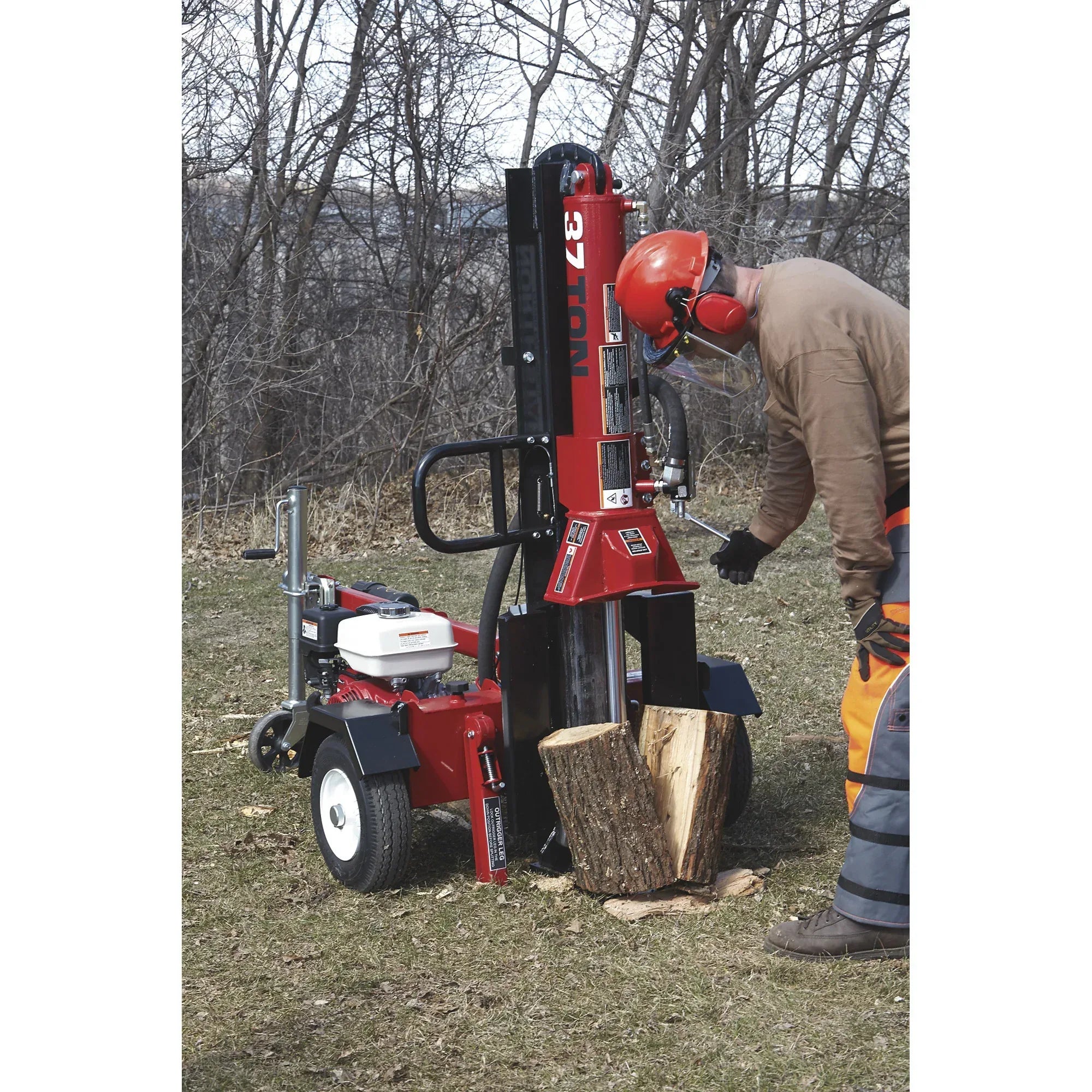
If you burn several cords a year and deal with oak, maple, or locust, a heavy-duty gas splitter is usually the safest bet. It gives you independent power, strong portability around the property, and enough force for serious firewood without tying up another machine. Look for solid beam construction, dependable hydraulics, and a working height that does not force you to wrestle every round from the ground.
This is also where horizontal/vertical capability matters. Vertical splitting is slower for some operators, but when you're handling big hardwood rounds, it can save a lot of lifting. That means less strain and a lower chance of getting hurt trying to muscle oversized logs onto the beam.
For tractor owners
If you already have a tractor with the right PTO horsepower and hydraulic setup, a PTO splitter can be a very smart buy. You avoid maintaining another gas engine, and you can put existing equipment to work. The economics are especially strong for farms and larger rural properties where the tractor is already part of daily life.
The key is matching the splitter to the tractor correctly. Do not assume every PTO splitter will perform the same behind every machine. Pay attention to PTO requirements, hydraulic output, and how the splitter is designed to operate under load. A good tractor-mounted setup can be efficient and durable, but only if the pairing is right.
For skid steer and commercial operators
If you're producing firewood for sale, cleaning up storm damage, or processing heavy rounds regularly, a skid steer-mounted splitter is often the most productive answer. It reduces manual handling, speeds up log positioning, and lets one machine do more of the lifting and feeding. That means less fatigue and better throughput over a full day.
This is where flow rate and compatibility become non-negotiable. Standard-flow and high-flow machines are not interchangeable decisions. A splitter that is wrong for your hydraulic system will leave performance on the table or create operating problems. If you're already thinking in gallons per minute and auxiliary hydraulics, you know the machine match matters as much as the attachment itself.
Gas vs electric vs PTO vs skid steer
Electric splitters have their place, but hardwood is usually where their limits show up fastest. If you're splitting small, straight, dry pieces close to the house, an electric unit can be convenient. If you're feeding a wood stove all winter with dense hardwood, most buyers will be happier stepping up to gas, PTO, or a machine-mounted hydraulic unit.
Gas splitters remain the default recommendation for many residential buyers because they balance power, mobility, and simplicity. They work well when you need real splitting force without relying on another power unit.
PTO splitters shine when you already own the tractor and want fewer separate engines to service. Skid steer splitters shine when labor reduction and output are the priority. They are not the cheapest path in, but they often become the cheapest path per cord when volume is high and labor is costly.
Features that actually improve hardwood performance
Some features sound good in a product listing but do not change much in the field. Others make a real difference the first long day you use the machine.
A strong return speed saves time on every cycle. A stable log cradle keeps split pieces from falling away and forces less bending. A quality beam and wedge assembly holds alignment under repeated hard use. Good table height and vertical capability reduce lifting strain. On attachment-based splitters, proper hydraulic matching and durable couplers are worth paying attention to because downtime around hydraulics gets expensive fast.
Build quality matters even more in hardwood than softwood. Dense rounds hit the machine harder. If you split ugly wood regularly, buy for structure and component quality, not just spec-sheet marketing.
Best log splitter for hardwood by buyer type
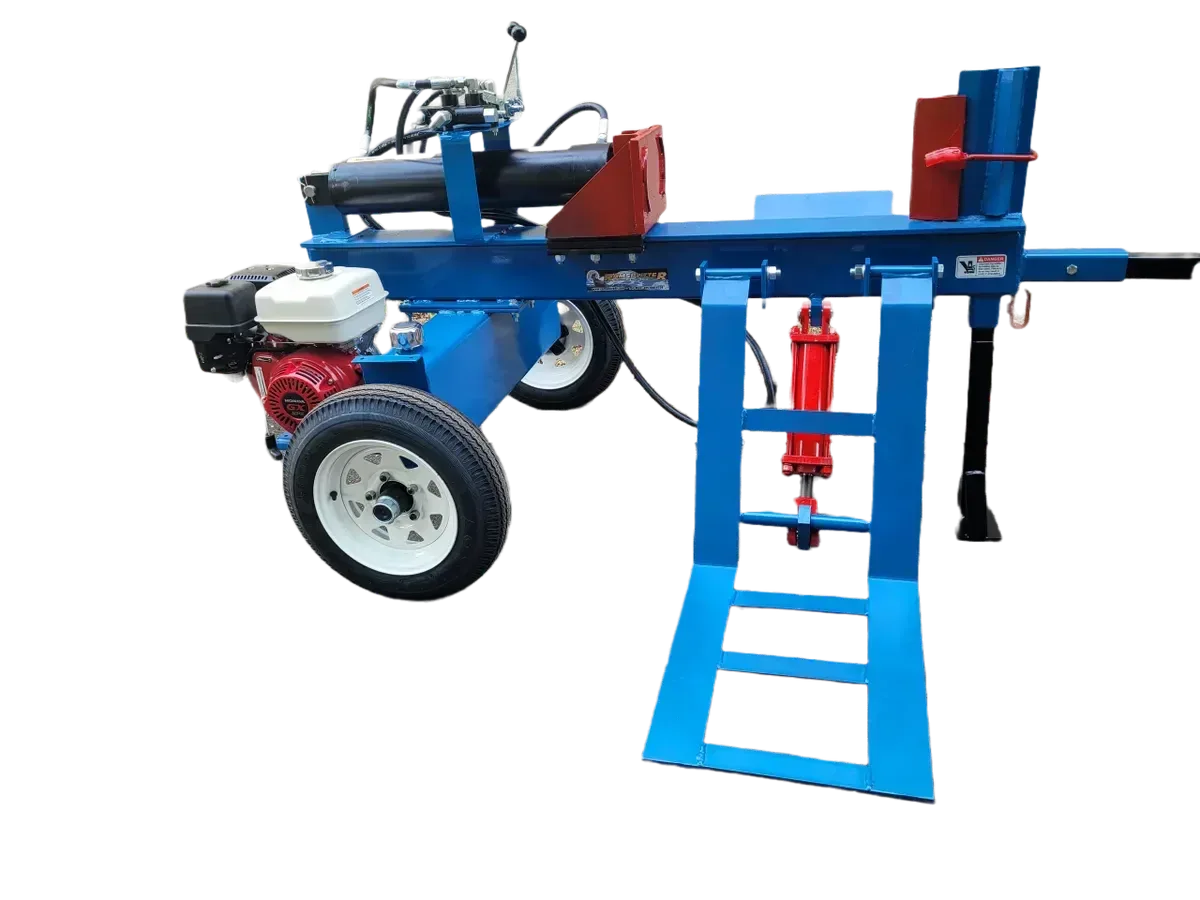
For most homeowners burning dense firewood, the best log splitter for hardwood is a heavy-duty gas hydraulic model in the upper-20 to mid-30-ton range, preferably with vertical capability for large rounds.
For farmers and landowners with a capable tractor, the best value often comes from a PTO splitter that is correctly matched to the tractor's output and your typical log size.
For commercial firewood sellers, arborists, and land-clearing crews, the best log splitter for hardwood is usually a skid steer-mounted hydraulic splitter sized to your machine's flow and your daily production target.
That distinction matters because the right machine is the one that keeps you producing without beating up your body or slowing down your crew.
How to make the right call before you buy
Be honest about the wood you split most often, not once a year. Measure your typical diameters. Think about whether your rounds are clean and straight or twisted and knotty. Estimate your seasonal volume. Then look at what power source already makes sense on your property or fleet.
If you're a homeowner who splits six cords of oak every fall, buy enough machine that you are not fighting it every weekend. If you're running a business, calculate output and labor, not just purchase price. A faster, heavier-duty splitter can pay for itself if it saves hours each week and keeps your crew fresher.
If you want help matching a splitter to your wood volume, tractor, or skid steer hydraulics, the team at Log Bear Works can walk you through the right category and setup at Log Bear Works. That's usually the fastest way to avoid buying too light, too slow, or simply wrong for your machine.
Hardwood is tough by nature. Your splitter should make the work easier, safer, and faster - not turn every pile into a test of patience and lower back endurance.