


When you are staring at a pile of knotty rounds and a short weather window, country of manufacture stops being a marketing detail. A North American made log splitter often matters for the reasons that count in the real world - build quality, parts access, hydraulic reliability, and the kind of support that keeps you producing instead of waiting.
For landowners, firewood sellers, farmers, and tree crews, the right splitter is not just about getting wood apart. It is about protecting your back, keeping your hands out of bad positions, and moving more volume with less wear on your body. That is where a well-built machine earns its keep.
Why a North American made log splitter stands out
Not every machine built in the U.S. or Canada is automatically better, and not every imported unit is automatically bad. But in this equipment category, North American manufacturing usually lines up with a few advantages serious users care about.
The first is material and component quality. Heavier beams, better weld consistency, quality hoses, proven hydraulic cylinders, and engines or motors with established service networks all affect how a splitter performs after the first season. Anyone can quote tonnage. The better question is how that machine holds up after repeated use on ugly hardwood, cold starts, and long production days.
The second is parts and service support. If a hose fails, a valve sticks, or a seal starts leaking, downtime costs money and momentum. North American-made equipment is often easier to support because replacement parts, technical help, and manufacturer communication tend to be more accessible. That matters a lot more in October than it does on a product page.
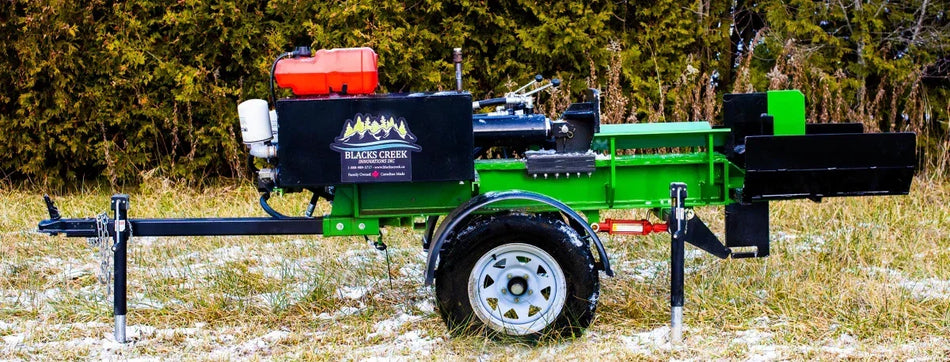
The third is design that reflects how people here actually process wood. Many North American manufacturers build for users handling oak, hickory, maple, elm, and other dense species, not just clean, straight-grain rounds. That usually means more attention to wedge design, beam strength, log cradles, table height, and towability.
What “made” should really mean
This is where buyers should slow down and read carefully. “Assembled in North America” and “made in North America” are not always the same thing. Some machines are assembled domestically using a mix of imported and domestic components. Others are built by U.S. and Canadian manufacturers with stronger control over fabrication, welding, hydraulics, and final testing.
That does not mean you need a perfect purity test before you buy. It means you should look past the sticker and ask practical questions. Who built the frame? Where does the hydraulic system come from? How easy is it to get parts? Who answers the phone if there is a problem? If those answers are solid, you are usually looking in the right direction.
Matching the splitter to your workload
The best North American made log splitter is the one that fits your wood volume, your species, and how you actually work. Overspending on unnecessary capacity ties up money. Undersizing a machine costs you time, fatigue, and frustration.
For homeowners and acreage owners
If you split a few cords a year for home heat or storm cleanup, a compact electric or mid-sized gas splitter can be a smart fit. Electric models are quieter, lower maintenance, and great when you are working near the house or barn. Their trade-off is straightforward - less force and a narrower comfort zone on large, twisted hardwood.
A gas splitter gives you more flexibility and punch, especially if your rounds are larger or your wood is not always clean and straight. If your pile includes seasoned oak crotches and ugly elm, extra capacity starts paying for itself fast.
For regular firewood production
If you are feeding an outdoor boiler, supplying multiple households, or selling firewood on the side, productivity matters more than convenience features. This is where cycle time, beam height, wedge setup, and log handling become just as important as tonnage.
A machine with decent force but a slow cycle can still bottleneck your day. The same goes for a splitter that makes you constantly wrestle heavy rounds into place. If you are processing volume every weekend, choose a unit that reduces repeated lifting and awkward repositioning. That is not a comfort issue. That is a long-term body preservation issue.
For commercial operators and tractor owners
PTO-powered splitters and higher-output hydraulic models make sense when you already have the right machine to run them and enough volume to justify them. These setups can be extremely efficient, but they depend on proper tractor compatibility, hydraulic flow, and a workflow built around production.
For commercial users, uptime is king. The best machine is rarely the cheapest one up front. It is the one that stays working through the season, handles tough wood without drama, and does not leave you chasing parts when jobs are stacked.
The specs that matter more than the sales pitch
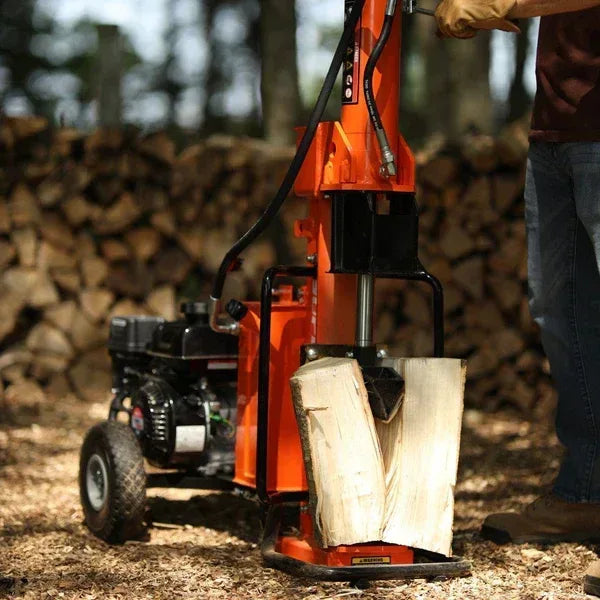
Tonnage gets the headline, but it is only one part of the buying decision. A 20-ton or 27-ton rating sounds meaningful, yet real performance depends on the whole system.
Cycle time matters because every second repeats hundreds of times in a day. A splitter that returns quickly can noticeably increase output, especially when you have a steady operator and staged rounds. But an ultra-fast cycle is not always better if the machine feels uncontrolled or underbuilt.
Beam construction matters because that is the backbone of the machine. A stronger beam handles repeated stress better, especially when tough logs do not split cleanly the first time. Wedge design matters for the same reason. A well-designed wedge starts the split cleanly and keeps the wood moving without wasting force.
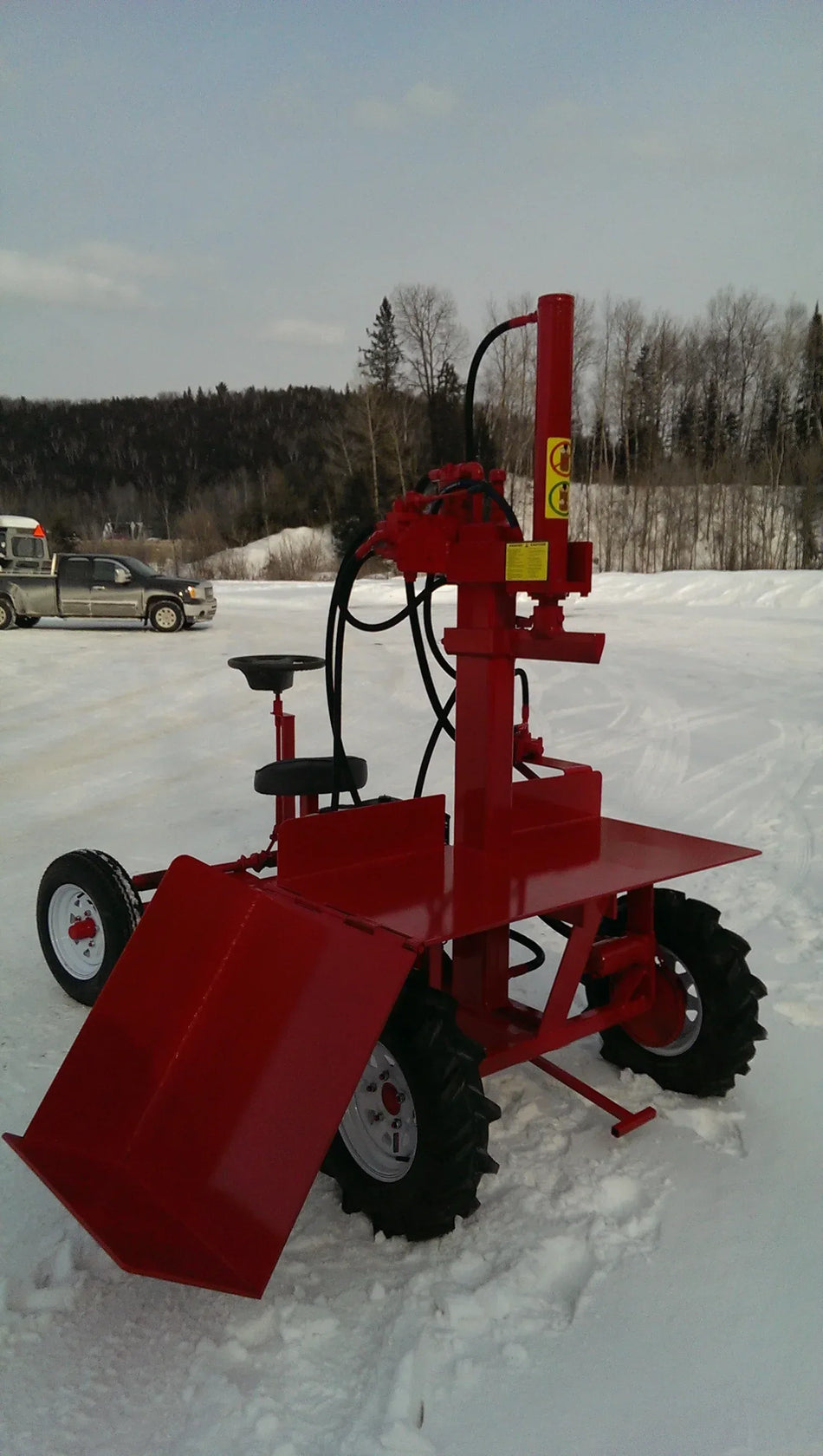
Working height matters more than many first-time buyers expect. If you are bent over all day loading rounds onto a poorly positioned beam, your lower back will let you know. Horizontal and horizontal-vertical splitters each have a place. Vertical capability is useful for big, heavy rounds you do not want to lift. Horizontal-only setups can be faster and cleaner for consistent smaller material. It depends on your wood pile.
And then there is towability and mobility. If you split in one spot all season, this may not be a major concern. If you move around a property, service multiple sites, or store equipment in a tight space, axle setup, tongue design, tire quality, and overall balance make a real difference.
Buying for durability instead of price alone
A cheap splitter can look attractive right up until it starts costing you weekends. Leaks, hard starting, cracked welds, weak control valves, and parts delays all erase any savings pretty quickly.
That is why experienced buyers think in terms of total cost of ownership. A higher-quality machine may cost more on day one, but if it lasts longer, runs more reliably, and protects your body by making the work easier, the math changes. This is especially true for anyone processing wood year after year.
A North American-made log splitter often earns its value here. You are not just buying steel and hydraulics. You are buying a better shot at consistent production, fewer breakdowns, and support that does not disappear after checkout.
Support is part of the machine
This category is technical enough that support should factor into the buying decision. That includes pre-sale guidance and post-sale help. If you are deciding between gas, electric, PTO, or a hydraulic attachment, a knowledgeable team can save you from buying the wrong class of machine.
That is one reason many buyers prefer a specialized equipment retailer over a generic marketplace listing. You want real specs, honest guidance, and someone who can talk through throughput, hydraulic requirements, and intended use without guessing. At Log Bear Works, that kind of support matters because the wrong machine does not just waste money - it slows production and adds physical strain.
Who should prioritize North American manufacturing the most?
If you split occasionally and only deal with small, straight-grain wood, you may have more flexibility. But if you process hardwood regularly, rely on a splitter through heating season, or use equipment to make money, North American manufacturing deserves serious weight in the decision.
The more demanding the job, the more the details matter. Better fit and finish, more dependable hydraulics, stronger support, and easier parts access all become more valuable when your machine is not a hobby tool. They matter even more when your goal is to produce more without grinding up your shoulders, elbows, and back in the process.
A good splitter should help you work longer by working smarter, not by asking your body to absorb the difference. That is the real case for buying quality.
If you are shopping for a North American made log splitter, think beyond the badge and focus on the machine’s ability to keep up with your wood, your schedule, and your body. The right one will not just split logs. It will give you more good hours in the day and fewer hard miles on your joints.