


If you are splitting a few cords a year, almost any decent machine can get by. If you are feeding a firewood business, keeping a crew moving, or processing big rounds without beating up your back and shoulders, this guide to buying a commercial log splitter needs to start with one hard truth: buying too small costs more than buying right. Lost production, operator fatigue, and downtime will eat through any upfront savings fast.
A commercial splitter is not just a stronger version of a homeowner machine. It is a production tool. The right one should shorten cycle time, handle ugly wood without constant repositioning, and keep operators working safer for longer days. That is the standard you should buy against.
What a commercial log splitter should actually do
A true commercial machine is built around throughput, not occasional use. That means enough splitting force for stringy hardwoods, enough beam and wedge strength for repeated heavy rounds, and a hydraulic system that does not feel slow once the work piles up.
Tonnage matters, but it is not the whole story. A 35-ton splitter with a sluggish cycle time can get outproduced by a well-designed machine with better hydraulics and smarter ergonomics. The same goes for log handling. If your crew is wrestling oversized rounds onto a waist-high beam all day, the machine may look strong on paper while still costing you output and physical wear.
The best commercial units are the ones that let you split smarter. Produce more. Earn more. They reduce unnecessary lifting, keep wood moving, and stand up to daily use without becoming a maintenance project.

Guide to buying a commercial log splitter by workload
The first buying question is not gas, electric, or hydraulic. It is volume.
If you process 5 to 10 cords a year for personal use on acreage, a heavy-duty prosumer machine may be enough, especially if most of your wood is clean, straight-grained, and already cut to consistent lengths. But once you are regularly working mixed hardwoods, large-diameter rounds, knotty logs, or customer orders on a deadline, you are in commercial territory.
For lower-volume commercial work or serious farm use, many buyers do well with a horizontal-vertical gas hydraulic splitter in the 25 to 35 ton range. That gives you flexibility on awkward rounds and enough force for most hardwood processing.
For higher-output firewood operations, a larger hydraulic unit with faster cycle times, heavier wedge assemblies, and better log handling is usually the smarter buy. If you already own a capable tractor or skid steer, PTO-driven and skid steer-mounted splitters can make even more sense because they turn an existing power source into a dedicated production setup.
This is where honest buying matters. If your workload is growing, buy for next season, not just this weekend.
Pick the power source that fits your operation
Gas log splitters
Gas-powered commercial splitters are still the default choice for many landowners and firewood producers because they are self-contained and mobile. You can tow them to a woodlot, stage them in a processing yard, and work without depending on another machine for hydraulic power.
They make sense if portability is a big part of your workflow or if multiple people need to use the splitter in different locations. The tradeoff is engine maintenance, fuel costs, and one more powertrain to keep in shape.
PTO log splitters
A PTO splitter is often a smart move for farmers and tractor owners who already have dependable horsepower sitting in the barn. If your tractor is available when you need to split, PTO power can be cost-effective and mechanically simple.
The key is matching the splitter to your tractor's horsepower and hydraulic setup. A bad match can leave you underpowered or inefficient. A good match can give you commercial-grade output without paying for a separate engine.
Skid steer-mounted splitters
If you are already running a skid steer in tree service, land clearing, or commercial firewood production, a skid steer log splitter can be one of the most productive setups available. You gain attachment-level control, machine-powered hydraulics, and often better material handling because the skid steer is already part of the work process.
This option shines when you are processing heavier wood and want to reduce manual lifting. It is also a strong choice for operators who value machine compatibility and want one platform doing more of the hard labor. The catch is simple: hydraulic flow requirements have to match the host machine.
Electric commercial splitters
Electric units can be useful in specific shop or indoor-adjacent settings where noise and exhaust matter, but for most true commercial outdoor work, they are a narrower fit. Unless your volume is modest and your wood is predictable, electric log splitters usually give up too much force or flexibility compared to gas, PTO, or skid steer-powered setups.
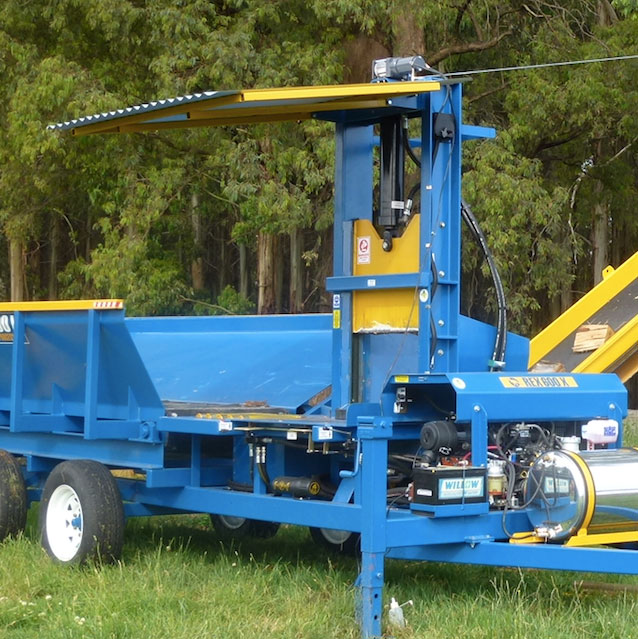
Tonnage, cycle time, and wedge design
Most buyers look at tonnage first because it is easy to compare. That is fine, as long as you do not stop there.
For mixed commercial firewood work, many operators start looking seriously in the 25 to 35 ton range. If you regularly split dense hardwood, oversized rounds, or ugly forked pieces, moving above that range may be justified. More tonnage gives you margin when the wood gets difficult.
Cycle time matters just as much for production. A fast cycle trims seconds off every split, and those seconds stack up all day. If you are processing volume, slow hydraulics are not a small inconvenience. They are a direct hit to output.
Wedge design also changes real-world performance. A standard two-way wedge may be best for nasty, inconsistent wood because it is more forgiving. A four-way wedge can raise productivity when your material is straight and uniform. Some commercial buyers benefit from interchangeable wedge options so the machine can adapt to the job instead of forcing every log through the same setup.
Horizontal, vertical, or attachment-based?
Beam orientation affects labor more than many first-time buyers expect.
Horizontal splitters are often faster and more comfortable for steady production when logs are already staged at workable height. Vertical capability becomes valuable when you are dealing with heavy rounds that no one should be lifting onto a beam by hand.
For operators with tractors or skid steers, attachment-based splitters may beat both because the machine does more of the lifting and positioning. That reduces strain and lowers the chance of the kind of repetitive wear that catches up with you after a few seasons.
If protecting your back, shoulders, and knees is part of the buying goal, do not treat ergonomics like a bonus feature. It is part of the return on investment.
Don’t ignore hydraulic flow and machine compatibility
This is where experienced operators separate a good purchase from an expensive headache.
If you are buying a skid steer-mounted splitter, check required hydraulic flow, pressure ratings, coupler compatibility, and whether your machine is standard-flow or high-flow. If you are buying PTO-driven equipment, confirm tractor horsepower requirements and how the splitter performs under your actual operating conditions, not ideal ones.
A splitter that looks great in a product photo is useless if your machine cannot run it properly. When in doubt, get machine-specific guidance before you buy. That one conversation can save you from underperformance, overheating, or a return you did not need to make.
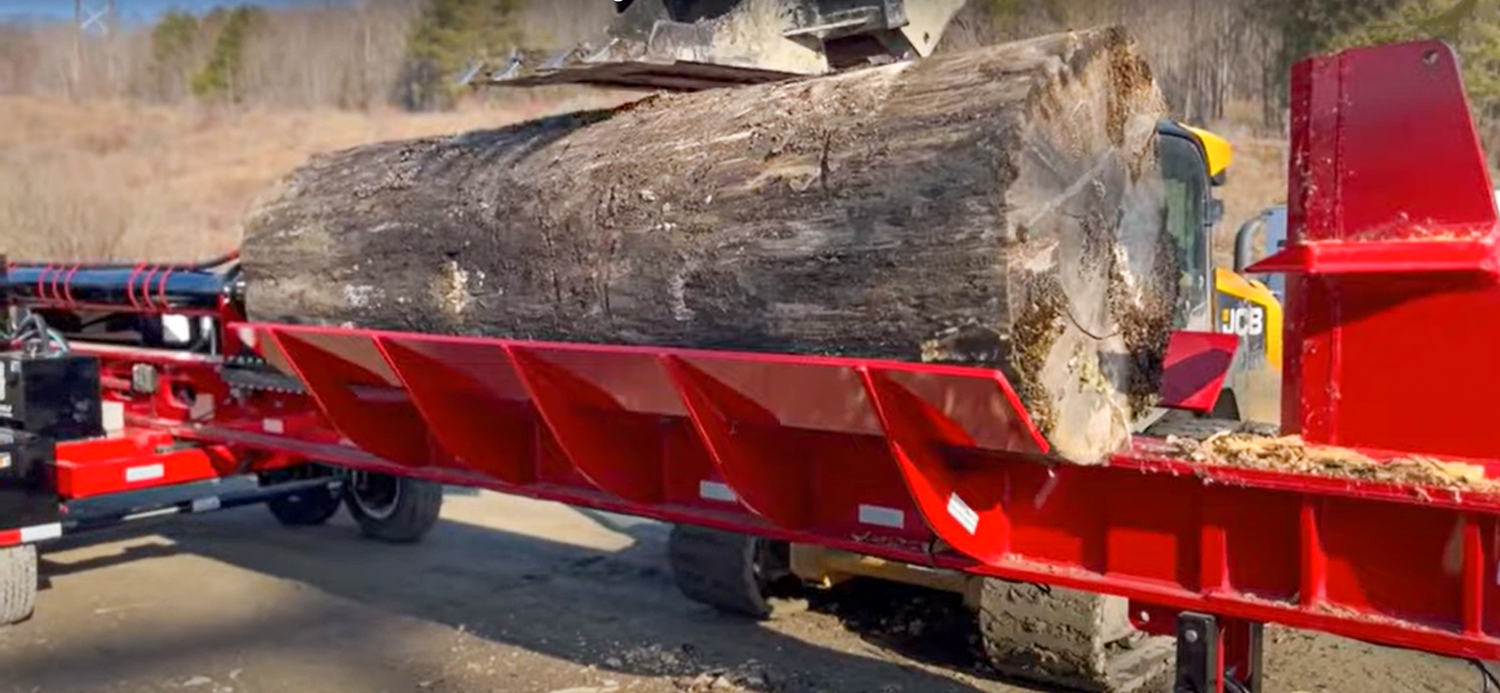
What separates a good deal from a costly mistake
Low sticker price can hide a lot. Thin steel, weak wedges, slower cycles, poor fit-and-finish, and hard-to-source parts all show up later, usually when you are busiest.
A better buying filter is total cost of ownership. Look at build quality, manufacturer reputation, warranty support, and whether the machine is designed for repeated commercial use instead of occasional weekend splitting. Free shipping, price matching, a real return window, and at least a one-year manufacturer warranty are not fluff. They reduce buying risk.
This is also why North American-made equipment matters to a lot of serious buyers. In many cases, it means better support, better parts access, and equipment built for the kind of work your crew actually does.
The best commercial log splitter is the one you will not outgrow next season
If your jobs are getting bigger, your wood is getting tougher, or your body is getting tired of doing work the machine should handle, that is your sign. Buy the splitter that matches your real production goals, your host machine if you have one, and the kind of wood that gives you trouble every week.
For many buyers, that means stepping into a heavy-duty gas hydraulic unit, a PTO splitter matched to an existing tractor, or a skid steer-mounted splitter that turns hydraulic power into serious output. If you are comparing options and want straight answers, Log Bear Works is built for that kind of decision. The right machine should do more than split wood. It should help you work safer, move faster, and keep more good years in your back and shoulders.
A commercial splitter is one of those purchases that pays you back in less strain, less wasted time, and more finished firewood at the end of the day. Buy with that standard in mind.